
OCTOBER 2026 REPORT ON HUMAN RIGHTS VIOLATIONS AGAINST JOURNALISTS
The detention, arrest, and investigation of journalists for their news reports, journalistic activities, and digital media posts, as well as raids on media organizations, publication suspension orders, and access restrictions, continued intensively throughout October.
In the October human rights violations report prepared by the Dicle Fırat Journalists’ Association (DFG), it was determined that 20 journalists were detained, 6 were arrested, investigations were conducted against 8 journalists, and lawsuits were filed against 3 journalists. A raid was conducted on the premises of a media outlet, one journalist was subjected to ill-treatment, and in two incidents, journalists were prevented from covering news stories. The total prison sentences handed down to journalists amounted to 3 years, 2 months, and 20 days. Two journalists were placed under house arrest. As of November 3, 2026, there are 33 journalists in prison.
These figures demonstrate that the pressure on journalists is not limited to isolated incidents; rather, they paint a picture that directly affects the practice of journalism, the dissemination of news to the public, and the public’s right to information.
As part of the “Fund” investigation, journalists İsmail Saymaz, Murat Ağırel, Şaban Sevinç, and Mustafa Balcı were taken into custody; Şaban Sevinç and Mustafa Balcı were detained, while Murat Ağırel was initially placed under house arrest but was later re-arrested and detained.
The arrest of BirGün reporter İsmail Arı following a complaint by former RTÜK Chairman Ebubekir Şahin, as well as the arrest of local news website owner Hasan Güraksu, also demonstrate that judicial pressure against journalists continues in various spheres.
JINNEWS News Editor Öznur Değer was sentenced to 1 year and 6 months in prison, while Osman Akın, the former editor of the Yeni Yaşam newspaper, was sentenced to 10 months. An investigation was launched against Mezopotamya Agency reporter Rabia Önver on the grounds of her social media posts.
In October, pressure on media organizations escalated to the point of suspending broadcast operations and blocking access to digital platforms. On October 14, a raid was conducted on Halk TV’s Istanbul headquarters; a trustee was appointed to the channel, and its broadcasts were suspended. Access to the channel’s YouTube, X, Facebook, Instagram, TikTok, and Telegram accounts was blocked; the platforms made these accounts inaccessible from Turkey.
Media outlets such as Mezopotamya Agency, Yeni Yaşam, Azadiya Welat, T24, bianet, BirGün, Kısa Dalga, Cumhuriyet, and Medyascope have also faced access restrictions and platform interventions regarding their websites or digital media accounts. The restrictions imposed on the Mezopotamya Agency’s website and X account, the limitations placed on Yeni Yaşam’s digital media accounts ( ), and the blocking of the newspaper’s website on October 31 demonstrate that the digital activities of independent media organizations, in particular, are being targeted.
In October, access to 231 pieces of digital media content and 22 news stories was blocked, and 4 websites were taken offline. These measures demonstrate that censorship is not limited to the removal of specific news stories from publication; the channels through which journalists and media organizations deliver their news to the public are also being targeted.
Sanctions imposed by the Radio and Television Supreme Council (RTÜK) on broadcasters also continued in October. SZC TV and Koza TV were fined for news reports and analyses related to a funding investigation, and sanctions were also imposed on Sözcü TV for its commentary on the arrest of Murat Ağırel. A total of seven broadcast bans were issued in October.
Violations of press freedom are not limited to detention, arrest, prosecution, and censorship. Economic difficulties and layoffs in the media sector also directly affect journalists’ job security and their ability to practice independent journalism.
The October report noted that at least 162 journalists lost their jobs. TELE2 Haber ceased broadcasting because it was unable to pay its RTÜK broadcasting license fee, while Cem TV also ceased operations. At Manşetiz, 12 journalists were laid off after their salaries were delayed, their meal cards were not credited, and their system access was blocked. Approximately 100 people were laid off at Yeni Şafak, GZT, and TVNET, while 50 employees were laid off at Sözcü.
Data from October 2026 reveals that journalists have faced detention and arrest due to their professional activities, news organizations have had their broadcasts suspended, digital platforms have been blocked, and the economic security of media workers has steadily eroded. When judicial proceedings, administrative sanctions, digital censorship, and economic pressures are considered together, it becomes evident that the scope of journalism is being restricted in multiple ways.
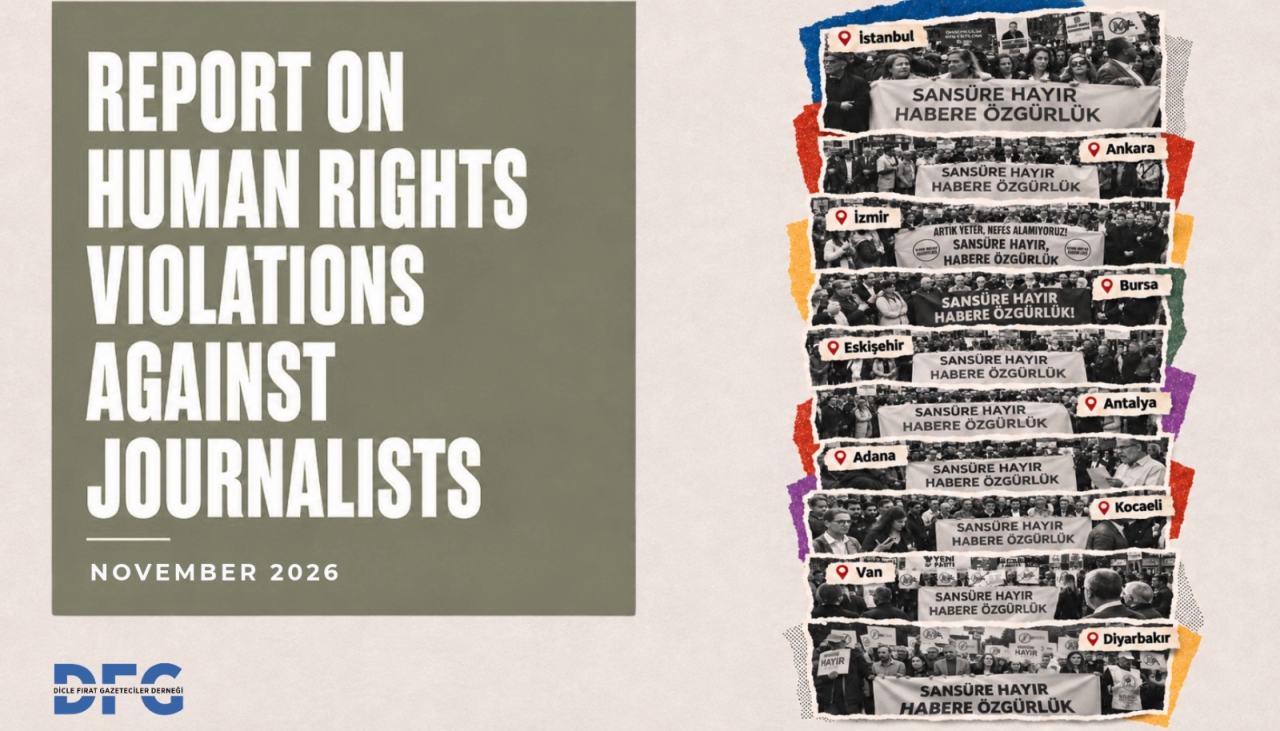
A significant development in October was the protests organized by journalists in 10 provinces on October 24 in response to all these attacks. The marches held by journalists in 10 provinces on October 24 demonstrated the shared determination of professional organizations and journalists to fight against the pressures on press freedom. Journalists coming together in different cities to raise their voices has once again highlighted the importance of solidarity against arrests, censorship, and the obstruction of professional activities. These marches underscore that the struggle for press freedom is a shared responsibility not only of journalists but of everyone who defends the public’s right to information.